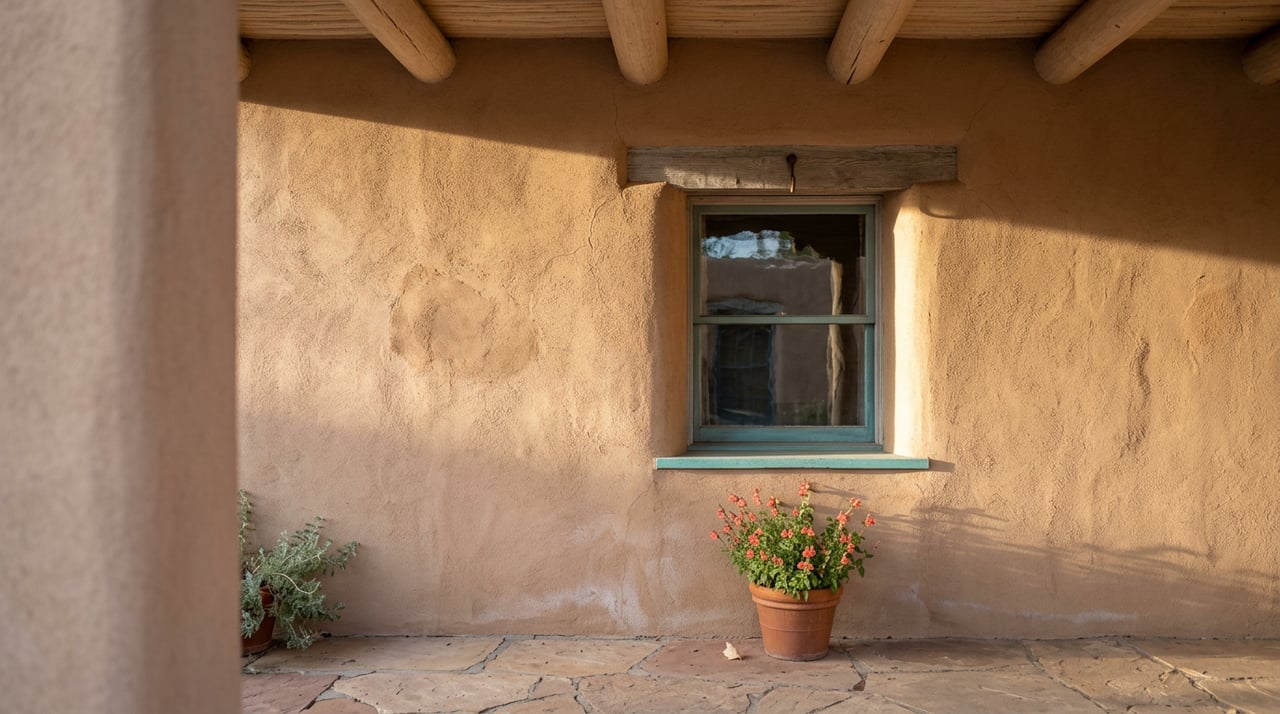
Ask a portal what your Eastside home is worth and it will hand you a number pulled from the citywide median. Ask a buyer's agent walking your portal a week before closing and you will get a very different number, one shaped by a three-letter acronym most sellers underestimate until diligence begins.
The Historic Districts Review Board, called the H-Board by everyone who has sat through a hearing, is the quiet co-author of every Eastside sale. Its status designation on your property, and the paper trail behind every exterior change made over the last thirty years, sets a ceiling on what a buyer will pay long before anyone opens negotiations on price.
Status Is the Ceiling, Not the Square Footage
Two adobes of identical size on the same lane can trade at meaningfully different prices, and the reason is almost never visible from the curb. It sits in a file at the Historic Preservation Division.
Any house within the district that is more than 50 years old, which is most of them, must go through a status review process that deems the property non-contributing, contributing, or significant. Non-contributing homes are the least restrictive. Contributing homes have somewhat restrictive codes. Significant homes are subject to the most restrictive regulations.
That ladder matters at the closing table because a buyer is not just purchasing your kitchen and viga ceiling. They are purchasing the range of future changes the H-Board will let them make. A non-contributing property carries optionality. A significant property carries stewardship. Buyers price both, and they price them differently.
A seller who understands where their home sits on that ladder before listing can position the story accurately. A seller who discovers the designation during a buyer's inspection period is negotiating from behind.
What Actually Triggers a Hearing
The scope of H-Board review is broader than most owners expect, and the surprise usually lands during a buyer's due diligence questions rather than at listing.
Exterior changes visible from the street, including replacing windows, changing the stucco color, re-roofing, or altering a garden wall, generally require approval.
The Historic Preservation Division administers staff-level administrative approvals for routine maintenance and minor alterations, and it routes anything larger to the quasi-judicial HDRB. Applications begin with the Historic Districts Application Form returned by email, and there is a $75.00 fee for initiating the application. The fee is trivial. The timeline is not.
Recent HDRB agendas from the Downtown and Eastside Historic District read like a catalog of the friction sellers wish they had resolved earlier. A contributing structure on Kearny Road returned to the board for alterations to a previous approval, including added pilasters on coyote fencing, replacement windows, and new gutters. A non-contributing lot on Lejano Lane sought an exception to build a 1,902 square foot residence at 16 feet 6 inches where 14 feet 5 inches was the allowable height. A contributing home on Otero Street requested an exception under the ordinance's windows and doors provision, 14-5.2(D)(5)(a)(i), to swap architectural features on a primary facade. None of these are exotic projects. They are the ordinary vocabulary of an Eastside renovation, and every one of them required a hearing.
For a seller, the relevant question is not whether the current buyer intends to renovate. It is whether the last three owners renovated correctly, and whether the file at Land Use reflects what stands on the lot today.
The Permit Gap That Shows Up in Diligence
The single most common friction in an Eastside transaction is the gap between the physical house and the paper house. Stucco has been retinted. A window opening has migrated eight inches. A coyote fence went from four feet to five. Someone traded wood casements for aluminum clad without ever filing a form. The work is often decades old, done by owners who assumed a small change was invisible to a city that turns out to have a long memory.
When a well-represented buyer requests the property's Historic Preservation file before removing contingencies, the mismatches surface. The buyer's agent then has three options: ask for a price reduction to fund a retroactive application and possible restoration, ask the seller to resolve it before closing, or walk. In a market where Santa Fe home prices over the three months ending May 2026 were down 7.9% year over year at a median of $525K, with homes selling after 58 days on the market compared to 53 days a year earlier, buyers have the time and the leverage to press option one and option two hard.
The defense is preparation. Before listing, an Eastside seller should:
- Confirm the property's current status designation in writing from the Historic Preservation Division, since the historic building status on GIS maps is being updated actively and staff should verify.
- Pull the full property file at Land Use and reconcile it against a walk-around of the exterior, noting every window, door, parapet, wall, gate, and stucco tone that is not reflected in the record.
- Decide, with counsel where warranted, which discrepancies are worth curing through a retroactive application and which are worth disclosing and pricing into the listing.
- Assemble the file as a marketing asset. A clean permit history is a rare Eastside amenity and deserves to be treated as one.
The point is not to make every seller a preservation consultant. It is to move the conversation about paper out of the buyer's inspection period and into the seller's control.
How a Softer 2026 Market Changes the Math
When Santa Fe was clearing inventory in three weeks with multiple offers, buyers accepted permit ambiguity because there was no time to litigate it. That market is gone. The regional median sits near $581,745 with homes sitting on the market for 77 days and inventory at roughly a 3.5-month supply, depending on the source and window used. Different data providers report different medians for Santa Fe, which itself is a reason to price an Eastside home on comparable sales within the district rather than on citywide averages.
What has changed is the shape of the negotiation. Buyers in a balanced market use diligence findings as pricing tools rather than deal-killers. An unresolved H-Board question is exactly the sort of finding that translates cleanly into a five-figure credit. Sellers who invest the modest cost and time to close those questions in advance recover that credit at contract.
There is also an argument about how to present the home. A contributing designation is not a defect. For a buyer drawn to the Eastside, it is often the entire point. Marketing that names the designation, describes the vigas, portal, and hand-troweled stucco with accuracy, and shows a clean file signals to a serious buyer that they are dealing with a seller who understands the asset. That signal supports price better than any staging choice.
A Short FAQ
Is there an HOA on the Historic East Side? No neighborhood-wide HOA governs the area. The H-Board functions as the exterior authority for properties inside the Downtown and Eastside Historic District, and its reach into windows, doors, stucco, height, and fencing is often broader than a private HOA would be.
Does status designation change over time? It can. The city's status inventory is being updated, and staff review may reclassify a property when its condition, additions, or the surrounding streetscape have changed materially. Confirming the current designation in writing before listing avoids surprises during diligence.
What happens if past work was never permitted? The city treats life-safety issues as emergencies where administrative approval may be granted. Most retroactive questions on cosmetic or structural changes route through the standard application process, which begins at $75 and moves to a hearing when the work falls outside administrative approval. The practical question for a seller is whether to cure, disclose, or credit, and that answer depends on the specific change and the buyer's tolerance.
Sell With the File in Hand
Eastside sellers who prepare the paper as carefully as they prepare the property tend to negotiate from a stronger position, close on cleaner terms, and defend price against a buyer's inspection period that has grown longer and more analytical since 2024. Everyone else discovers the H-Board on someone else's timeline.
If you are considering a sale on the Historic East Side and want a candid read on how your property's status, permit history, and current market position line up before you list, the team at Go West Real Estate Partners is glad to walk the house, review the file, and lay out a plan. Contact Us to start the conversation.