Ask a longtime Historic East Side resident what the first week of September looks like and most will say the same thing: everything shuts down for a while, the streets fill up, and it eventually clears. That's true, but it flattens two very different events into one blur, and the flattening costs residents useful information. Zozobra and the Fiesta de Santa Fe are not the same closure stretched over nine days. They are two closures with different footprints, different durations, and different relationships to the streets this neighborhood actually lives on.
Get the distinction right and the first week of September stops feeling like a single long inconvenience. It becomes a short, specific, predictable disruption on a handful of named streets, followed by more than a week of programming that mostly happens somewhere else entirely.
Two events, two very different maps
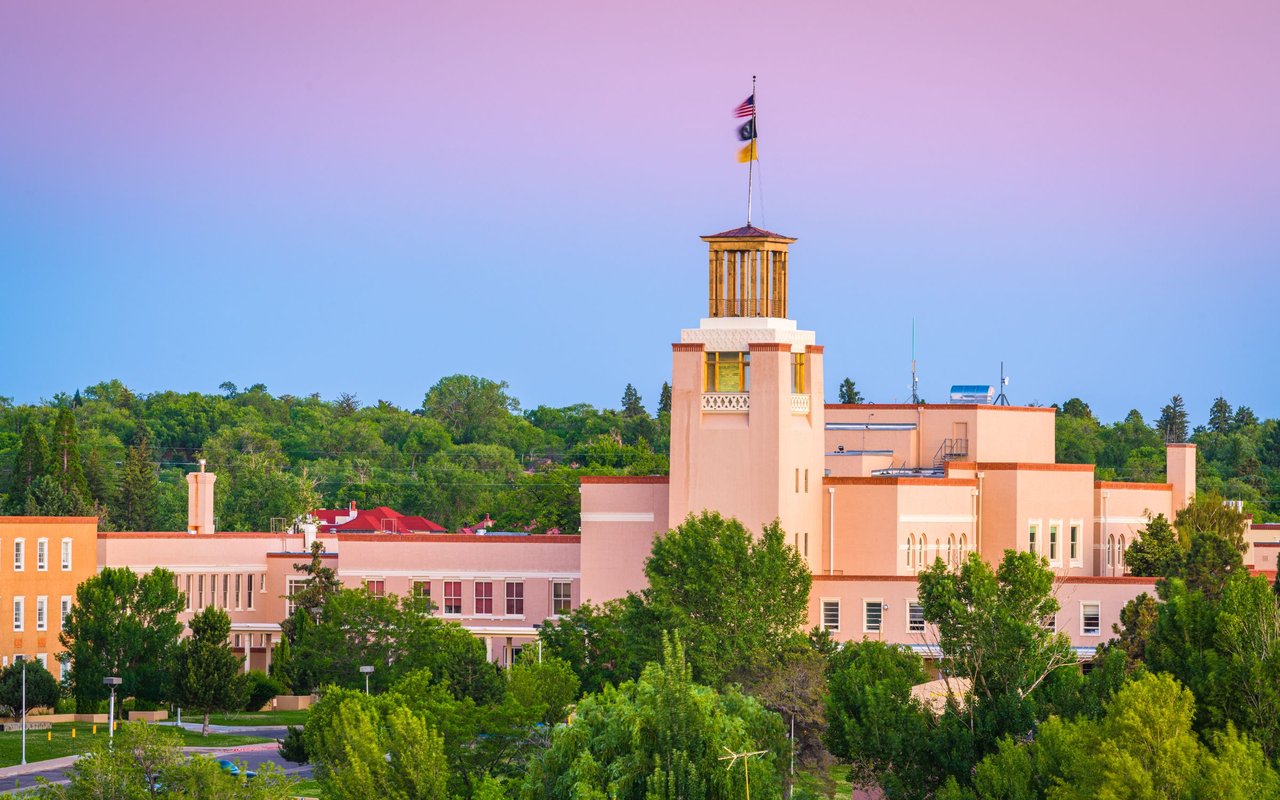
The 102nd Burning of Zozobra happens Friday, September 4, 2026, in Zozobra Field at Fort Marcy Park, a few blocks north of the Plaza. The 314th Fiesta de Santa Fe runs September 5 through 13, more than 300 years of the city's oldest continuous public celebration, and it is centered on the Plaza itself, with satellite events at the Cathedral Basilica of St. Francis of Assisi, Rosario Chapel, the Lensic Performing Arts Center, and the Santa Fe Community Convention Center on West Marcy Street.
That last detail matters more than it sounds like it should. Fiesta's official venues sit on West Marcy, San Francisco Street, and North Guadalupe Street, all inside the downtown core, none of them requiring the closure of a residential street. Zozobra's footprint is the opposite. Its road closures land directly on the corridor that rings the Historic East Side: Hillside Avenue and Washington Avenue, both closed from East Marcy Street to Paseo de Peralta, plus Murales Road, Old Taos Highway, and the Bishop's Lodge corridor to the north.
So the neighborhood absorbs the short, sharp event on its own streets, and the long, nine-day event happens somewhere it can watch from a distance. Treating the whole stretch as one undifferentiated closure means over-preparing for the wrong week and under-preparing for the right one.
The corridor that actually closes, and for how long
The Zozobra closures start before the burn itself. On Thursday, September 3, Murales Road closes at 7 a.m. from Valle del Sol to Cuesta del Norte for fireworks staging, with one lane held open for emergency vehicles only. Old Taos Highway, Calle Estado, Governor Dempsey Drive, and Mansion Drive drop to local traffic only between Old Taos Highway and Bishop's Lodge. Artist Road and Hyde Park Road close between Bishop's Lodge and Gonzales Road, though through traffic can still use Gonzales Road, with the caveat that adjacent closures will back it up.
Then, on Friday, the day of the burn, Hillside Avenue and Washington Avenue close from East Marcy Street to Paseo de Peralta. Gates at Fort Marcy Park open at 4 p.m., the official program starts at 6 p.m., and the park itself closes at 8:45 p.m.
Put the two days together and the residential disruption runs from Thursday morning to Friday night, roughly a day and a half of altered access on a specific set of named streets. It is real, and if you live along that corridor it will change how you get in and out of your own driveway for those two days. But it is not a nine-day siege. By Saturday morning, the streets that ring Fort Marcy Park are functioning normally again, even though the Plaza is still nine days into Fiesta.
Where the crowd actually goes
The other assumption worth checking is that a neighborhood this close to Fort Marcy Park absorbs the parking overflow from an event that drew nearly 65,000 people last year. It mostly doesn't, by design. Organizers direct drivers and rideshare passengers toward the South Capitol Rail Runner Station, where complimentary shuttles run to and from the park, with the last regular and accessible shuttle departing at 8:30 p.m., ahead of the 8:45 p.m. gate closure. The city is actively routing traffic away from the residential streets around Fort Marcy Park and toward a transit lot roughly three-quarters of a mile south, not funneling it through the neighborhood.
For residents who live inside walking distance, that shuttle system is mostly irrelevant. Fort Marcy Park sits only a few blocks from the Plaza, which makes walking the more practical option for anyone already downtown, and it means the traffic pressure that shows up on Hillside and Washington during those two days is closure-related, not overflow-parking related. Know that distinction and the neighborhood's actual Zozobra experience looks less like gridlock and more like a short, well-managed perimeter around a park that happens to be next door.
The nine days that follow, and what's actually on them
Fiesta itself opens quietly. The Misa de Pregón, a 6 a.m. Proclamation Mass, happens the same morning as the burn, September 4, followed by a procession through the Plaza honoring La Conquistadora and the Mayor's official proclamation opening the week. It is a striking contrast if you think about the day as a whole: the neighborhood's calendar starts before sunrise with a quiet religious service downtown, and ends that same night with fireworks and a crowd in the tens of thousands a few blocks away.
From there, the schedule runs across the following venues and dates, according to the Fiesta Council's own calendar:
- September 9: a concert at the Lensic Performing Arts Center
- September 10: an event at the Santa Fe Community Convention Center
- September 11: services at Rosario Chapel
- September 11 to 13: the bulk of Plaza programming, including music, dancing, and food vendors
- September 12: the pet parade and the Gran Baile
- September 13: a procession and pontifical mass, followed by the Desfile de la Gente, Fiesta's Historical/Hysterical Parade
None of this requires closing a residential street on the Historic East Side. It requires navigating a busier Plaza, and it rewards a little planning if you want a table at a restaurant inside that core, since the same nine days that fill the Plaza with vendors and music also fill downtown dining rooms with the same crowd. The Ultimate Zozobra ticket package even builds a private dinner at La Fonda on the Plaza into its price, which tells you something about how full the restaurants inside the closure perimeter get on burn night itself.
What this actually changes about the week
None of this is a reason to avoid downtown for the better part of two weeks, and it isn't a reason to brace for nine days of disruption on your own block either. It is a reason to be specific about which two days belong to your street and which nine days belong to the Plaza. The Kiwanis Club of Santa Fe has run Zozobra for more than a century, funding youth programs through it the whole time, and the Fiesta Council has run its celebration even longer. Both organizations publish their schedules well in advance, and both are worth checking against the calendar above rather than against a vague sense that "that week" is difficult.
If you live along Hillside or Washington, plan Thursday and Friday around the closures. If you don't, the practical adjustment is smaller than it looks from a distance: a busier Plaza, fuller restaurants, and a city that, for nine days every September, does what it has done for over 300 years.
Whether you're settling into a home on the Historic East Side or still learning how its calendar actually moves through the year, Go West Real Estate Partners knows this neighborhood block by block, not just by its reputation. If you have questions about how a property here lives through Santa Fe's biggest week, or any other week, we're glad to talk.