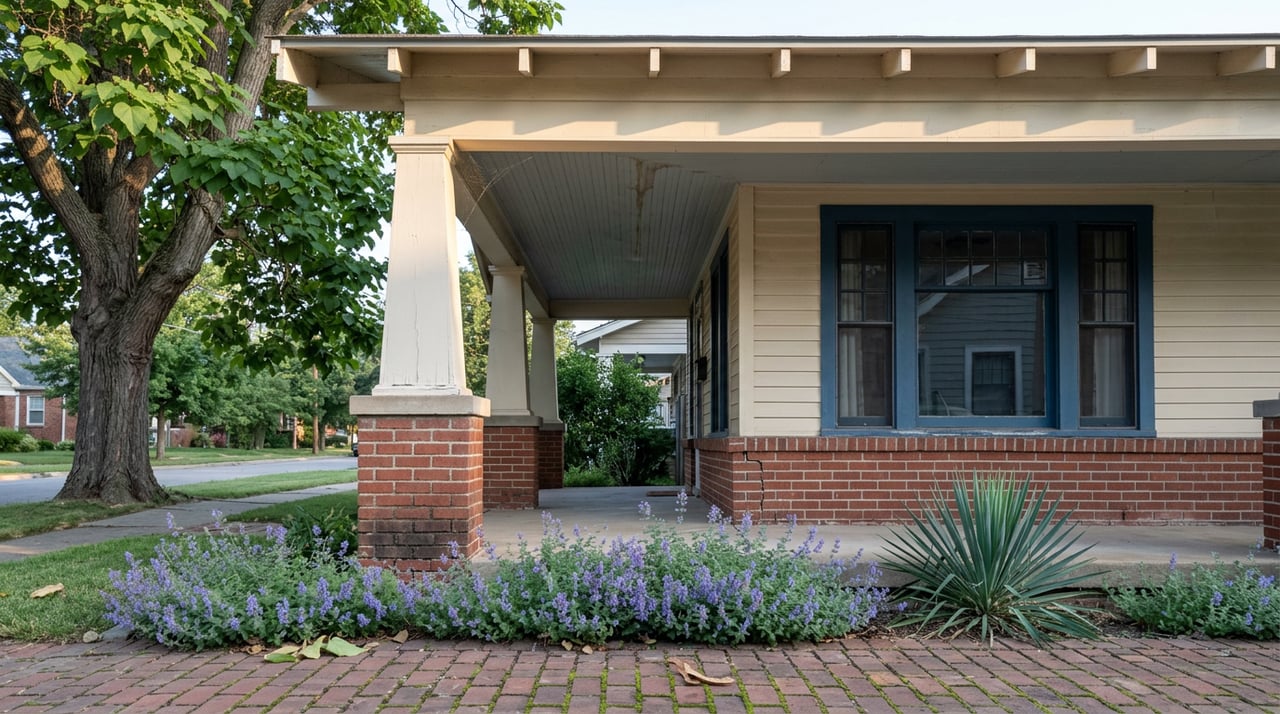
Ask five people where South Capitol begins and ends, and you'll get five confident, slightly different answers. Ask where the Don Gaspar Historic District begins and ends, and the answer is on file with the National Register of Historic Places, drawn along four named streets that don't move depending on who you ask.
That gap between the neighborhood name everyone uses casually and the district the city actually regulates is where South Capitol sellers run into trouble, usually a few weeks before they meant to list. A homeowner plans to swap out old windows or add a garage, assumes the whole neighborhood works the same way, and finds out otherwise only after a contractor mentions a permit that needs board approval first.
One Name, Two Different Rulebooks
South Capitol, as most residents use the term, describes the grid of streets south of the New Mexico State Capitol building, running roughly from Paseo de Peralta down toward Cordova Road. The Don Gaspar Historic District sits inside that area. It does not wrap around it or define its edges. Listed on the National Register of Historic Places in 1983, the district follows a boundary as specific as a property line, according to the National Register summary of the district:
- North: Paseo de Peralta
- East: Old Santa Fe Trail
- South: Houghton Street
- West: Don Cubero (approximate)
Cross any one of those four streets and you've left a federally recognized historic district behind, whether or not the house across the road looks nearly identical to the one you're standing in front of.
What Contributing Status Actually Changes
Homes inside that boundary carry one of three designations once the city's Historic Preservation Division has reviewed them: significant, contributing, or non-contributing. That designation, not the house's age or its curb appeal, decides whether a window replacement, a new garage, or stucco repair needs a public hearing before the Historic Districts Review Board or can move forward as a routine staff sign-off. The city's own description of the board's mandate is direct about the goal: the board exists to make sure buildings in the district maintain "general harmony as to style, form, color, height, proportion, texture, and material" with their historic neighbors.
Smaller projects, like general maintenance or minor alterations, often qualify for an administrative approval handled by city staff. Larger changes go before the full board, and initiating either type of case starts with a Historic Districts Application Form and a $75 filing fee through the city's Historic Preservation Division.
This isn't a hypothetical hurdle. In 2025, the owners of a property at 1323 Paseo de Peralta, sitting within the Don Gaspar Area Historic District, brought a case before the board simply to establish primary facade designation, a step that has to happen before the city will weigh in on anything bigger the owners might want to do to the house. That case sat on a public Historic Districts Review Board agenda alongside similar status reviews for other district properties, the kind of procedural groundwork that has to clear before a renovation can start, let alone before a listing photo gets taken.
Material adds another layer. A portion of the district's original housing stock used "pen tile," structural blocks manufactured by inmates at the New Mexico Penitentiary, which once stood near the neighborhood's southwest edge. Matching that material on a contributing structure is a different contractor search than finding someone who can patch standard adobe or frame stucco, and it's worth sorting out before a home inspection turns up a repair nobody has priced.
The Casitas on Don Gaspar Avenue Are the Cautionary Tale
If a seller wants proof the city treats this designation seriously, even for a government client, the fight over four casitas on Don Gaspar Avenue makes the case. The State of New Mexico proposed a 163,000-square-foot office building on South Capitol Street to house state employees and elected officials, and as of the most recent public reporting, from December 2025, the plan had spent roughly a year and a half moving through design revisions and board review, according to reporting from the Santa Fe New Mexican. The Historic Districts Review Board had approved demolition of a motor pool and garage building at the site but declined to approve tearing down the four contributing casitas. City staff recommended against demolishing those structures as well as the Concha Ortiz y Pino Building. A joint State-Local Government Historic Review Board had been convened back in June 2024 specifically to settle the casitas' fate, and the state pulled its own proposal back to the design phase rather than face that review.
Local architect Anthony Guida, a former board member, argued the ordinance "shouldn't be to just prevent development from happening in our town." That tension is exactly what a homeowner inherits along with a contributing designation. The review process is real, it can stretch across multiple hearings and more than one review body, and it applies with the same rigor to a state agency proposing a 163,000-square-foot building as it does to a homeowner asking to enlarge a garage.
Price Data Won't Answer This Question For You
As of May 2026, sources tracking Santa Fe's overall market reported medians anywhere from just under $500,000 to nearly $800,000, depending on whether the figure measured closed sales, active listings, or a trailing average. Within South Capitol specifically, broader neighborhood price guides published this year put the median somewhere between $575,000 and $675,000, while three-bedroom Craftsman bungalows inside the Don Gaspar boundary itself have listed anywhere from roughly $795,000 up to $1.6 million depending on lot size.
None of those numbers tell you whether the house you're touring needs a hearing to replace its windows. That answer lives in a status letter from the Historic Preservation Division, not in a comparable sales report, and it's the reason two houses a block apart, priced similarly, can require completely different pre-listing preparation.
Four Calls Worth Making Before You List
- Request a status letter from the city's Historic Preservation Division confirming whether the parcel sits inside the Don Gaspar Historic District boundary and, if so, whether it's designated significant, contributing, or non-contributing.
- Ask whether planned repairs qualify for administrative approval or require a full hearing before the Historic Districts Review Board, and build the extra weeks a hearing adds into your listing timeline.
- If the home includes pentile construction or other original district material, price out a contractor who has specifically worked with it, not a general adobe or stucco crew.
- Keep any existing case history, like a prior facade designation, with your listing file. A buyer researching a contributing property will ask, and having the paperwork ready shortens that conversation considerably.
A Short FAQ
Does every home in South Capitol need historic district approval to make changes? No. Only homes inside the Don Gaspar Historic District boundary, bounded by Paseo de Peralta, Old Santa Fe Trail, Houghton Street, and Don Cubero, fall under the city's Historic Districts Review Board jurisdiction. Homes in the broader South Capitol area outside that boundary follow standard city permitting.
How do I find out if a specific house is contributing, significant, or non-contributing? The City of Santa Fe's Historic Preservation Division maintains status records for properties in the district and can confirm a parcel's designation directly. That status is what determines whether upcoming work needs a board hearing or can be handled through administrative approval.
Does the state office project on Don Gaspar Avenue affect nearby home values? It's too early to say with confidence. As of the most recent public reporting, from December 2025, the project had gone through roughly a year and a half of design changes and board hearings without a final resolution, and the outcome depended on further Historic Districts Review Board action.
If you're weighing a sale inside South Capitol, or you're simply not sure which side of Don Gaspar Avenue your house sits on, Go West Real Estate Partners can help you pull the actual file before you list, not after a buyer's inspection or an appraiser's question forces the issue. Contact Us to start with a straight answer about your specific address.