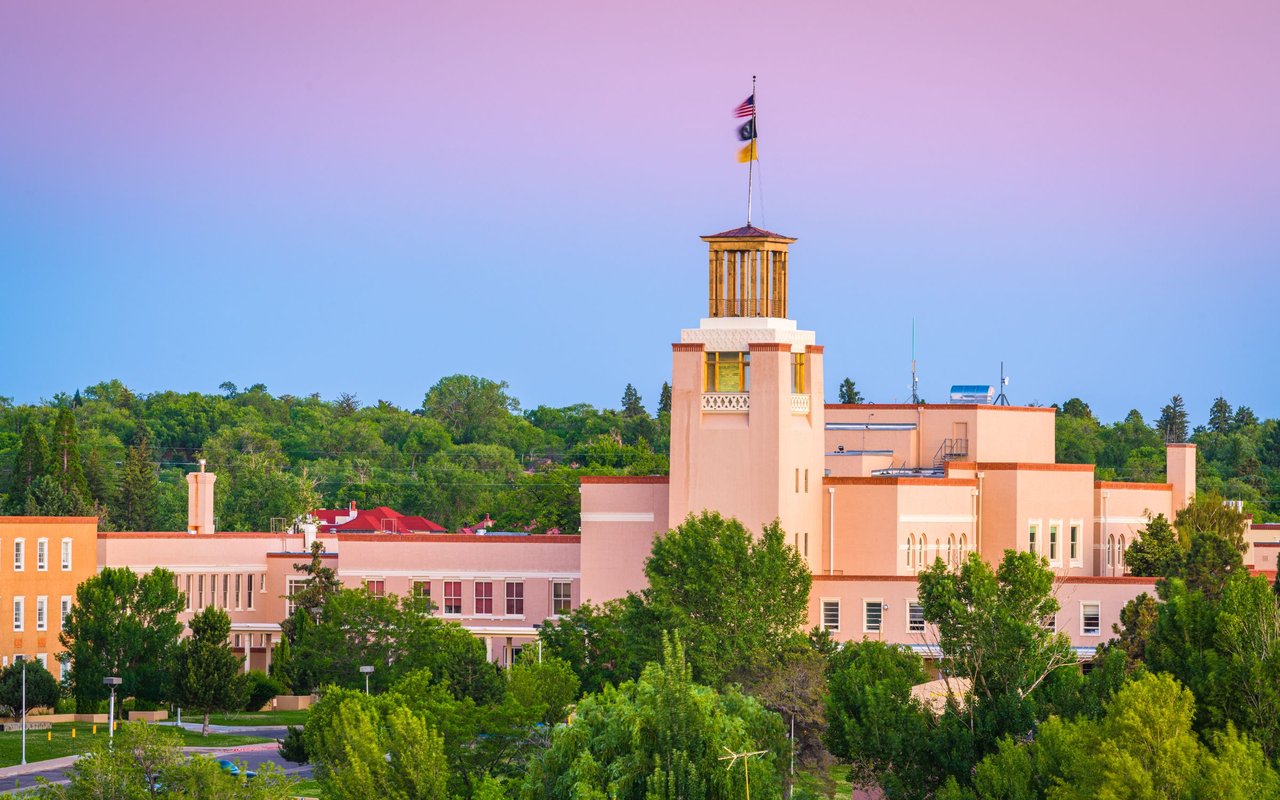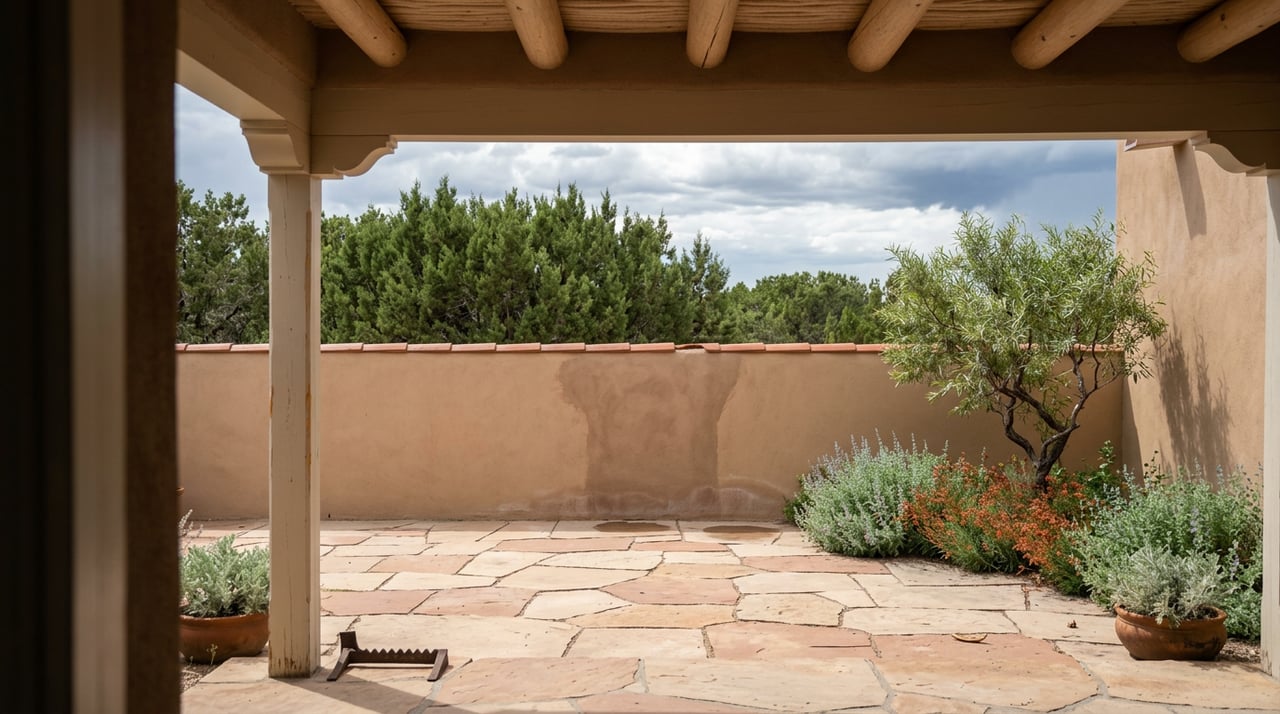
The rain here does not arrive the way it does in Houston or Dallas. It builds over the Jemez by late morning, drifts east across the Caja del Rio through lunch, and lands on the fairways around two in the afternoon in a fifteen-minute cell that clears in time for a second glass of iced tea on the portal. Residents who have been through a few summers stop reading the daily forecast and start reading the clock.
The National Weather Service in Albuquerque defines the North American Monsoon as June 15 through September 30, and the 2026 Monsoon Outlook was last updated on July 16. Inside Las Campanas, that ninety-day window does something the rest of the Santa Fe calendar does not. It imposes a shared daily structure on 4,700 acres of otherwise privately paced life. The thesis of this piece is simple: the monsoon is the closest thing this community has to a public schedule, and almost every amenity here is quietly organized around a 2 p.m. pivot most newcomers do not see until their second July.
The two o'clock pivot
July highs in Santa Fe run between 80 and 94 degrees, with overnight lows dropping into the high 50s, according to AccuWeather's July 2026 monthly forecast. Those numbers matter less than the shape of the day. Morning air at 7,200 feet is still, dry, and often lit at an angle that photographers drive across the state for. By early afternoon, convective towers have organized over the Sangres. By four, the fairways are wet, the arena is closed for footing, and the dog park has emptied.
The response is not to slow down. It is to front-load the day and reopen it after dinner.
| Window | What holds | What quietly moves indoors |
|---|---|---|
| 6:30 – 10:30 a.m. | Golf on Sunrise and Sunset, trail rides out of the Equestrian Center, Bluebird Trail monitoring, walking loops | — |
| 10:30 a.m. – 1:30 p.m. | Pool, Spa Café outdoor lunch, tennis on the shaded synthetic clay courts | — |
| 1:30 – 5:00 p.m. | — | Fitness Center, Desert Willow Spa & Salon, Hacienda Clubhouse dining rooms, indoor riding hall |
| 5:00 – 8:30 p.m. | Sunset Park picnics, Yappy Hour at the dog park, Log Cabin patio, evening tee times | — |
The table is the schedule most residents converge on within a season or two. It is also the reason the Club invested in a Fitness & Wellness Center with seven synthetic clay courts and both an indoor riding hall and an outdoor jumping arena. The building program anticipated the weather, not the other way around.
What the ponds are doing right now
The most underused piece of monsoon-season expertise inside the gates has nothing to do with golf. It has to do with birds.
The ponds at The Club sit in a county that offers very little open water. That scarcity turns them into a staging area for migrating waterbirds, and the volunteer birding notes maintained on the Las Campanas water and wildlife pages mark the third week of July as the moment fall shorebirds first show up. Green-winged, blue-winged, and cinnamon teal. American wigeon, northern shoveler, canvasback, and redhead. American avocet, greater and lesser yellowlegs, great blue heron, and green heron.
For a resident who has walked the same cart path in June and seen nothing on the water, the transition is abrupt. A week of monsoon rain refills the ponds, and within days the count of species doubles. If a household has ever considered picking up a pair of binoculars, the two weeks bracketing the end of July are the moment the investment pays off fastest, because the birds arrive on schedule and the light at 7 a.m. is the best it will be all year.
The Bluebird Trail's last month
The other bird story on the property is winding down as the shorebirds arrive. The Las Campanas Bluebird Trail monitors nesting boxes on a weekly basis from April through July, and the program has introduced more than 400 new Western and Mountain Bluebirds to the community over four seasons, with House Wrens, Juniper Titmouse, and Ash-throated Flycatchers also raising broods in the boxes. Data collected on species, egg counts, and fledglings is submitted to Cornell University's NestWatch program.
Residents interested in a Sunday morning walking the boxes with the monitoring team can reach Tom Egelhoff at [email protected]. The signup opportunity is small, quiet, and one of the few ways to spend an unhurried July morning inside the community with someone who can name every bird on the property. The trail is also an accredited element of the Audubon Cooperative Sanctuary Program for Golf Courses, which is the same designation the Club holds at the community level.
When the sky closes, where the Club opens
The building program at the Club is easier to read once monsoon season is the frame. The 46,000-square-foot Hacienda Clubhouse is not simply a fine-dining venue. It is the answer to what happens when the fairways go dark and thirty households look at each other and decide they are not cooking. A few coordinates worth knowing before the first big storm cell hits:
- Hacienda Clubhouse: casual and fine dining, plus the Club's cultural and musical programming, most of which lands on evenings when it would be uncomfortable to eat outdoors anyway.
- Log Cabin: relaxed country western room for pizzas, salads, burgers, and BBQ. This is the storm-afternoon room. Kids' Night Out programs also stage from here, which lets parents book a Hacienda table without a sitter conversation.
- Spa Café: casual outdoor lunch and snack service through the summer months, positioned at the pool. Swim cover-ups and shirts required. This is the pre-storm lunch, not the after-storm one.
- Desert Willow Spa & Salon: massage, skincare, and salon treatments. The most efficient reservation on the calendar is a 2 p.m. slot on a day the forecast has already flagged.
- Fitness Center: Technogym equipment, group classes from Spinning to Yoga and Pilates. The class schedule fills quickly on afternoons when riders and golfers have both been pushed indoors.
The Club also maintains an indoor riding hall alongside the outdoor jumping arena and dressage court, which is the one facility that separates a serious equestrian program from a fair-weather one. Boarding, lessons in Western, dressage, and hunter/jumper disciplines, and custom trail rides continue through the season, with the ring simply shifting under the roof when lightning is on the radar.
Sunset Park earns its name in August
Sunset Park is a small pocket park inside the gates that most residents drive past for years before they use it. August is when it makes sense. Monsoon convection produces the specific atmospheric conditions that give Santa Fe the sunsets it is famous for. Residual moisture at altitude, broken cumulus catching low-angle light, and the Jemez silhouetted against the western sky.
An informal picnic at Sunset Park between 7:30 and 8:15 in the last two weeks of July and the first three weeks of August is the closest thing the community has to a shared evening ritual. Bring a blanket, one bottle of something cold, and nothing else. The Yappy Hour crowd at the grassed dog park is essentially the same rhythm with different attendance.
Both events are worth mentioning to guests who have flown in for a week. Neither will appear on any itinerary the concierge desk hands out.
A resident's monsoon-week template
For the household that wants a working seven-day frame during peak season, the shape below is what most long-term residents converge on. It assumes an average monsoon week with afternoon cells four days out of seven, which is roughly what the pattern has delivered in recent years.
- Monday: Early tee time on Sunset. Indoor lunch at the Hacienda. Spa appointment at 2:30.
- Tuesday: 7 a.m. walk along the Bluebird Trail loop with binoculars for the ponds. Lap swim before the Spa Café opens for lunch. Afternoon reading indoors.
- Wednesday: Trail ride out of the Equestrian Center before the heat builds. Kids to Camp Campanas. Log Cabin for an early dinner, home before the storm.
- Thursday: Fitness class mid-morning. Errands into town while the sky is still clear. Hacienda for a Club cultural program in the evening.
- Friday: Second tee time of the week on Sunrise. Yappy Hour at the dog park at five. Grill at home during the after-storm cool-down.
- Saturday: Guests in town. Morning at the pool, lunch at the Spa Café, indoor afternoon, Sunset Park picnic at 7:45.
- Sunday: Bluebird Trail monitoring shift if signed up, otherwise a slow morning. Long evening dinner at the Hacienda.
The template is not prescriptive. It is what the weather draws out of the amenity map when the amenity map is read honestly.
The quiet thing worth noticing
The community's ongoing capital plan, branded Imagine Tomorrow, is fully funded and running without member assessments. The visible pieces of that plan matter less, in the current season, than what it signals: the Club is treating shade, indoor space, and cross-facility flexibility as the next generation of amenity value. The monsoon is one of the reasons.
Sustainability infrastructure quietly reinforces the same reading. The golf courses are irrigated with non-potable water under a contract tied to the Buckman Direct Diversion pipeline, and a conservation project reduced irrigated turf by more than 35 acres. The community operates as a designated Audubon Cooperative Sanctuary. A resident who came for the golf and stayed for the birds is not an unusual arc here.
For anyone considering a move into Las Campanas, or for owners weighing whether it is time to think about a change of house within the gates, the summer rhythm above is the strongest argument for spending an unhurried week here in the second half of July. If you would like a private introduction to a specific enclave, or a market conversation grounded in the way the community actually lives across a full season, Go West Real Estate Partners is available for a call at your convenience. Contact Us whenever the timing suits.